
undefined
What Makes a Well-Formed Paper Cup Rim Important for Drinking Comfort?
Release Time:
2026-10-23
As a professional food packaging supplier, Heyi Packaging provides a range of paper cups for coffee shops, restaurants, takeaway services, and other food and beverage businesses. When selecting disposable cups, buyers often focus on capacity, material, printing, and price. However, the rim is another important detail that deserves attention. A poorly formed edge can affect how a cup feels against the lips, how easily customers drink from it, and how consistently the product performs during daily use.
A well-designed paper cup rim is not simply a finishing detail. Its shape, smoothness, and consistency contribute to the overall quality of the cup. For businesses purchasing paper cups in bulk, understanding these factors can help them evaluate products more effectively and choose packaging that meets customer expectations.
1. How Does the Paper Cup Rim Affect Drinking Comfort?
The rim is the part of the cup that comes into direct contact with the user's lips. Even when the beverage itself is prepared perfectly, an uneven or rough edge can make drinking less comfortable.
A properly formed rim should have a consistent shape and a smooth surface. It should not contain obvious sharp edges, loose paper fibers, or irregular sections that can distract customers during use. These details matter in coffee shops and takeaway businesses, where customers may use the same type of cup several times a day.
The rim also affects how the cup feels when a customer takes a sip. A consistent edge provides a more predictable drinking experience, while an uneven edge may feel uncomfortable or make the cup appear poorly manufactured.
For businesses serving hot coffee, tea, and other beverages, the rim should be evaluated as part of the complete cup design. Its shape and finish need to work with the intended beverage, cup dimensions, and any compatible lid.
2. What Is a Rolled Rim Paper Cup?
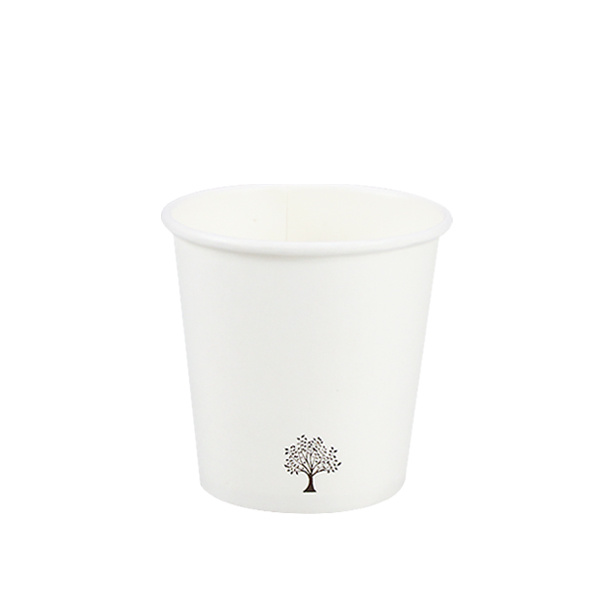
A rolled rim paper cup has an upper edge that is folded and rolled into a rounded profile rather than left as a flat, exposed paper edge. This construction is commonly used in disposable beverage cups.
The rolled edge provides a more finished contact surface and helps the cup maintain a consistent opening. It can also contribute to the stiffness of the upper section, depending on the paperboard, rim dimensions, and manufacturing process.
For coffee shops and takeaway beverage brands, this design offers several practical advantages:
- A smoother edge for everyday drinking.
- A more uniform appearance across individual cups.
- A finished upper section that is easier to inspect during quality checks.
- A defined rim profile that can be evaluated for compatibility with the intended lid.
However, a rolled rim alone does not guarantee a high-quality cup. If the edge is uneven, excessively compressed, or poorly formed, the finished product may still have defects. Buyers should therefore assess the actual rim quality rather than relying only on the product description.
3. Which Manufacturing Factors Influence Rim Quality?
The appearance and performance of a cup rim depend on several aspects of production. Understanding them helps buyers identify meaningful quality differences between suppliers.
Paperboard properties
The paperboard needs to support the forming process without excessive cracking, tearing, or deformation. Material properties, thickness, and moisture conditions can influence how consistently the upper edge can be rolled.
Paperboard that is unsuitable for the intended cup design may produce an irregular rim or a finish that varies between production batches. Material selection should therefore be considered alongside the cup's dimensions and intended application.
Rim-forming precision
During manufacturing, the upper edge must be shaped consistently around the cup opening. Differences in forming pressure, tooling condition, or machine settings may result in uneven rolling or inconsistent rim dimensions.
A well-controlled process aims to produce a uniform edge without visible damage. Regular inspection can help identify deviations before large quantities of cups are packed and shipped.
Production consistency
For businesses ordering thousands of cups, quality needs to remain stable throughout the order. A few samples may look acceptable, but variation can become more noticeable when cups from different cartons are used in the same location.
Suppliers should maintain appropriate inspection procedures for finished products. Buyers can also request samples from representative production batches when consistency is especially important.
4. How Does Rim Quality Influence the Overall Paper Cup Quality?
The rim is one of the visible areas customers notice when they pick up a cup. Its finish can influence their perception of the product, particularly when the cup carries a café logo or a beverage brand's design.
Good paper cup quality involves more than appearance. The rim should be considered alongside the cup's roundness, side seam, bottom construction, dimensions, and overall forming quality.
For example, an irregular opening may make a cup look distorted even if the printed artwork is clear. A damaged edge may also create an unpleasant contact point during drinking. When defects occur frequently, they can increase product rejection and create unnecessary waste for businesses.
It is important to distinguish between appearance defects and functional defects. A minor visual variation may not always affect use, while a damaged or poorly formed rim may require the cup to be rejected. Establishing clear acceptance criteria helps purchasing teams assess products more consistently.
For food and beverage businesses, the objective is to obtain cups that look presentable, feel comfortable to use, and remain consistent across routine service.
5. How Should Businesses Inspect Paper Cup Rims Before Bulk Purchasing?
Before placing a large order, buyers can include rim inspection in their sample evaluation process. A few simple checks can reveal whether the product meets their requirements.
Check the edge visually
Inspect the entire circumference of the opening. Look for uneven rolling, cracks, loose fibers, dents, or other visible damage. The edge should have a consistent profile without obvious defects.
Check the opening for uniformity
Place several sample cups side by side and compare their openings. Noticeable differences in roundness or rim height may indicate variation in forming quality. Where precise dimensions matter, request the supplier's specifications and agreed tolerances.
Evaluate the drinking experience
Use the sample cup with the beverage for which it is intended. Check whether the rim feels smooth against the lips and whether the opening provides a comfortable drinking experience.
This practical assessment is particularly useful for cafés and beverage brands that want to maintain a consistent customer experience.
Check lid compatibility
If the cup will be used with a lid, test the actual cup-and-lid combination. Confirm that the lid fits as intended and that the rim does not show obvious deformation during fitting or removal.
A rolled edge does not automatically ensure compatibility with every lid. The cup diameter, rim profile, and lid design must be suitable for one another.
Compare samples across batches
When possible, inspect samples from more than one production batch. Consistency is important for repeat orders, especially for businesses that operate multiple locations or use large quantities of disposable cups.
Buyers should discuss any recurring defects with the supplier before confirming bulk production.
6. Choosing the Right Paper Cup for Different Business Needs
Not every business needs the same cup design. A takeaway coffee shop may prioritize drinking comfort, dependable lid fit, and consistent appearance. A restaurant may need several cup sizes for different beverages, while a catering company may place greater emphasis on uniformity across large orders.
When reviewing suppliers, buyers should consider the intended beverage, cup capacity, dimensions, rim finish, printing requirements, and ordering volume together.
Single-wall, double-wall, and ripple-wall cups are available for different serving needs. Although these constructions differ in their overall design, the rim still deserves individual attention during sample approval.
For customized products, buyers should also review the printed cup after forming. Artwork should be positioned appropriately, and the finished cup should meet the agreed appearance and quality requirements.
A clear specification sheet can help both parties avoid misunderstandings. It may include cup dimensions, material requirements, printing details, lid compatibility, acceptable visual variation, and inspection criteria. These details provide a practical basis for evaluating samples and maintaining consistency in repeat orders.
 |
 |
FAQ
1. Why is a rolled rim used on paper cups?
A rolled rim creates a rounded, finished upper edge that can improve drinking comfort and contribute to the stiffness of the cup opening. Its actual performance depends on the design and manufacturing quality.
2. How can buyers identify a poorly formed paper cup rim?
Look for uneven edges, cracks, loose fibers, dents, or noticeable differences between sample cups. A practical drinking test and a lid-fit check can help identify problems that are not obvious from visual inspection alone.
3. Does a rolled rim guarantee better paper cup quality?
No. Rim design is only one part of the finished product. Material selection, forming precision, side-seam construction, bottom sealing, and overall production consistency also influence quality.
4. Should businesses test paper cup rims before bulk ordering?
Yes. Inspecting samples before approving a bulk order helps buyers evaluate edge smoothness, opening uniformity, lid compatibility, and consistency. It is also useful to establish clear acceptance criteria with the supplier.
Conclusion
A well-formed rim contributes to the comfort, appearance, and usability of a disposable paper cup. For businesses that serve beverages every day, small differences in edge smoothness and forming consistency can influence the customer experience and the amount of product rejected during quality checks.
When evaluating paper cup quality, buyers should inspect the rim alongside other important features rather than treating it as an isolated detail. Sample testing, lid-fit checks, and clear product specifications can help reduce uncertainty before bulk purchasing.
Heyi Packaging supplies paper cups and other food packaging products, with teams focused on product development, design, quality control, and inspection. By defining practical requirements and checking samples carefully, businesses can work with their suppliers to select paper cups that suit their serving needs and maintain consistent quality across orders.
Previous:
Related News

As a professional food packaging supplier for 25 years, we have excellent teams focusing on product development & design, quality control & inspection .

Online message
Contact Us
E-mail:
TEL:
WhatsAPP:
Address:
No.18,Yuntai Road,Xianghe ETDZ, Langfang city, Hebei province, China


