
undefined
What Exactly Does SGS Test in Paper Cups
Release Time:
2026-07-23
| When sourcing disposable beverage containers, quality and safety are non-negotiable. For businesses relying on these products—from independent coffee shops to global fast-food chains—ensuring that every cup meets rigorous standards is paramount. This is where independent testing organizations come into play, with SGS (Société Générale de Surveillance) being one of the most recognized names globally. But what exactly does an SGS paper cup certification entail? Understanding this process is crucial for buyers who want to guarantee the integrity of their supply chain. This comprehensive guide breaks down the rigorous quality assurance cups undergo during SGS evaluation, providing you with the knowledge needed to make informed purchasing decisions. | 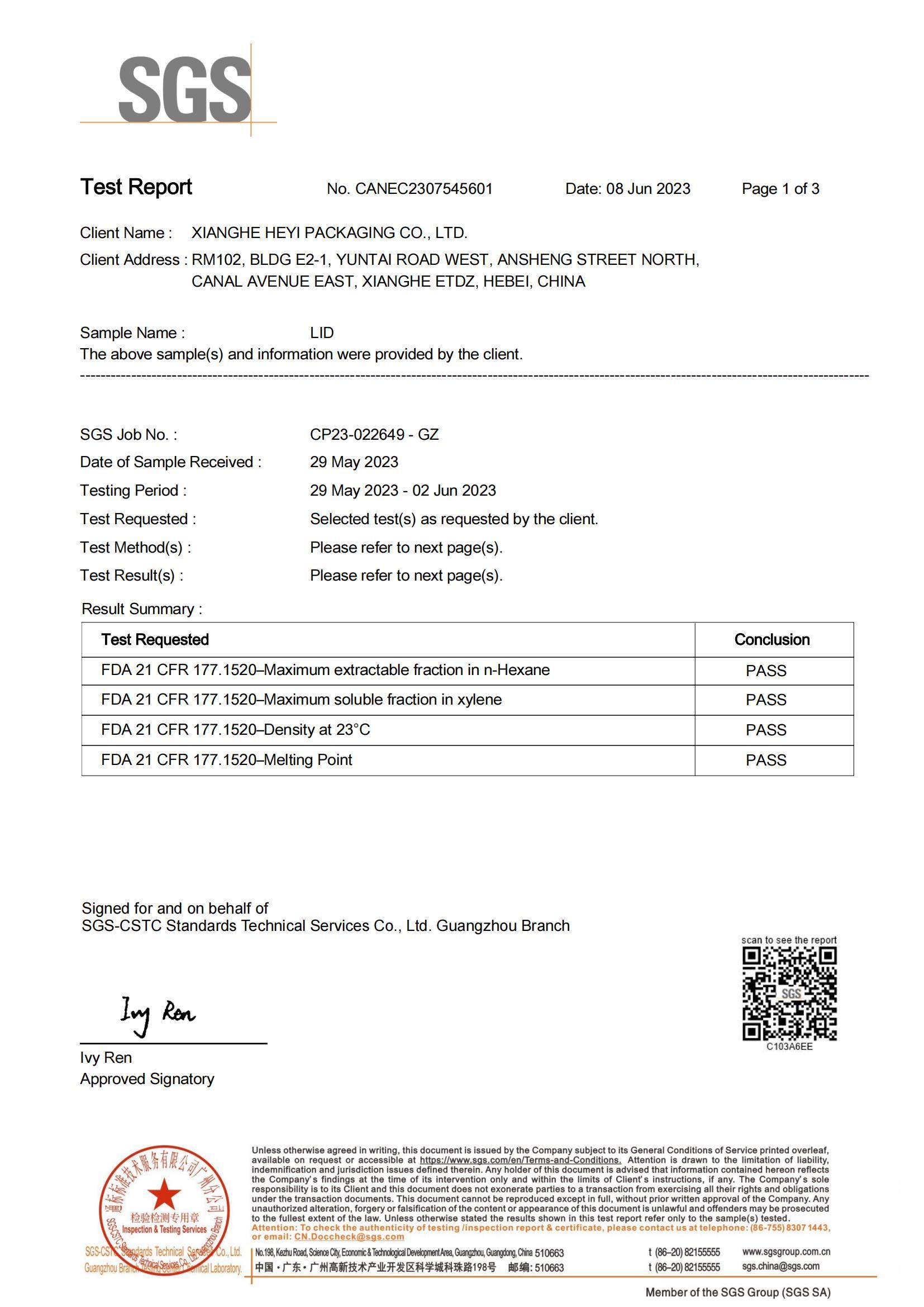 |
Introduction to SGS and Its Importance in Packaging
SGS is a multinational company headquartered in Geneva, Switzerland, renowned for providing inspection, verification, testing, and certification services. They operate a network of over 2,600 offices and laboratories around the world. In the context of food packaging, an SGS certification is often seen as a gold standard, a testament that the product complies with international health, safety, and environmental regulations.
For buyers, seeing that a product has passed SGS testing provides immediate peace of mind. It mitigates the risks associated with chemical leaching, structural failure, and non-compliance with local food safety laws, which can lead to costly product recalls or damage to brand reputation.
The Scope of Paper Cup Testing
Paper cup testing is a multifaceted process. Because these containers come into direct contact with consumables—often hot liquids—they must be evaluated across several domains: chemical safety, physical performance, and microbiological hygiene. SGS employs standardized testing methodologies (such as ASTM, ISO, or EN standards) depending on the target market of the cups.
1. Chemical Migration and Safety Analysis
Perhaps the most critical aspect of the evaluation is ensuring that harmful chemicals do not migrate from the packaging material into the beverage. Paper cups are typically lined with a thin layer of plastic (like PE or PLA) or a water-based coating to make them waterproof. SGS rigorously tests these materials.
-
Overall Migration Limits (OML): This test measures the total amount of non-volatile substances that transfer from the cup into a food simulant (e.g., acetic acid for acidic drinks, ethanol for alcoholic or fatty drinks) under specific time and temperature conditions.
-
Specific Migration Limits (SML): This focuses on individual, potentially hazardous chemicals. SGS will look for traces of heavy metals (like lead, cadmium, and mercury), formaldehyde, phthalates, and bisphenol A (BPA), ensuring they remain well below legally permitted thresholds.
-
Sensory Testing (Robinson Test): Sometimes, packaging can alter the taste or odor of the food. SGS conducts sensory evaluations to ensure the paper material and its coatings do not impart any off-flavors or smells to the liquid it holds.
2. Physical and Mechanical Performance
A cup must not only be safe but also functional. A structural failure when holding scalding coffee is a significant liability. The physical testing phase ensures the structural integrity of the cup.
-
Leakage Testing: This is fundamental. Cups are filled with hot and cold liquids and observed over an extended period to check for any signs of seepage, particularly along the side seams and the bottom rim.
-
Capacity and Dimensional Checks: SGS verifies that the stated volume (e.g., 12oz, 16oz) is accurate and that the dimensions (height, top diameter, bottom diameter) are consistent, which is crucial for secure lid fitting.
-
Rigidity and Compression Strength: How well does the cup hold up when gripped? Tests are conducted to measure the force required to crush or deform the cup. This ensures that the cup won't easily collapse in a customer's hand.
-
Heat Resistance: For cups intended for hot beverages, SGS tests how well the material withstands high temperatures without melting the lining, degrading the paper, or becoming too hot to handle safely.
3. Microbiological Testing
Since they are used for food service, the cups must be hygienically produced and stored. SGS conducts microbiological assessments to ensure the absence of harmful pathogens.
-
Total Plate Count: This determines the overall microbial load on the surface of the cup.
-
Pathogen Detection: Tests are specifically designed to look for dangerous bacteria such as Salmonella, E. coli, and Staphylococcus aureus. The presence of any of these is grounds for immediate failure.
4. Environmental and Sustainability Verification (Optional but Common)
As consumer demand for sustainable packaging grows, many buyers request additional testing regarding the environmental impact of the cups.
-
Compostability Testing (e.g., EN 13432 or ASTM D6400): If a cup claims to be compostable (usually those with PLA or water-based linings), SGS can verify this by testing its disintegration, biodegradation, and lack of eco-toxicity in a composting environment.
-
Recyclability Assessments: SGS can evaluate whether the materials used can be effectively processed in standard recycling facilities.
-
FSC/PEFC Verification: While separate from product testing, SGS can verify the chain of custody to ensure the paper pulp comes from responsibly managed forests.
Key Testing Parameters Summary
The following table provides a quick reference to the typical tests conducted during an SGS evaluation for paper beverage containers:
|
Category |
Specific Test |
Purpose |
Common Standards |
|---|---|---|---|
|
Chemical |
Overall Migration |
Measures total substance transfer to food |
EN 1186, FDA 21 CFR |
|
Chemical |
Heavy Metals Analysis |
Detects toxic metals (Lead, Cadmium, etc.) |
RoHS, REACH |
|
Physical |
Leakage Test |
Ensures seams and base are watertight |
ISO 28399 |
|
Physical |
Rigidity Test |
Checks structural strength when gripped |
TAPPI T 489 |
|
Hygiene |
Microbial Limits |
Verifies absence of harmful bacteria |
FDA BAM, ISO 4833 |
|
Sensory |
Odor and Taste Transfer |
Ensures material doesn't affect beverage flavor |
EN 1230 |
Why Buyers Should Demand SGS Reports
When sourcing, asking a supplier if their products are "high quality" is insufficient. You need verifiable proof. Requesting a recent, valid SGS report provides objective data.
-
Risk Mitigation: It protects your business from the legal and financial fallout of selling unsafe products.
-
Regulatory Compliance: It ensures you meet the import and food safety regulations of your target market (e.g., FDA in the US, EFSA in Europe).
-
Brand Protection: Serving a customer a leaking cup or one that smells faintly of chemicals damages your reputation. Rigorous testing prevents this.
-
Supplier Accountability: A supplier willing and able to provide comprehensive SGS reports demonstrates transparency and a commitment to manufacturing excellence.
How to Read an SGS Report
Receiving an SGS report can be overwhelming, as they are highly technical documents. Here is a simplified guide on what to look for:
-
Report Number and Date: Verify that the report is recent (ideally within the last 1-2 years) and that the report number is authentic (you can often verify this on the SGS website).
-
Product Description: Ensure the product tested matches exactly what you are buying (e.g., "12oz Single Wall PE Lined Cup").
-
Testing Standards Used: Check that the standards align with your market's requirements (e.g., FDA standards for the US market).
-
Results and Conclusions: Look for clear "PASS" indications for all relevant tests. If there are "FAIL" results, the product is non-compliant.
-
Applicant Information: Ensure the supplier you are dealing with is the one who commissioned the test, or that they have a clear relationship with the manufacturer listed.
The Future of Quality Assurance in Packaging
As the packaging industry evolves, so do the testing requirements. We are seeing a significant shift towards alternative materials—such as bamboo fiber, bagasse (sugarcane), and innovative water-based barrier coatings that replace traditional plastics.
SGS and similar organizations are continually updating their protocols to address these new materials. For instance, testing for PFAS (per- and polyfluoroalkyl substances, or "forever chemicals") has become increasingly common for molded fiber products, as these chemicals were historically used for grease resistance. Staying abreast of these testing trends is essential for buyers committed to providing safe and sustainable products.
Conclusion
Navigating the complexities of food packaging procurement requires diligence. An SGS paper cup certification is not merely a bureaucratic checkbox; it is a vital safeguard. By understanding the rigorous testing encompassing chemical migration, physical durability, and microbiological safety, buyers can confidently build a supply chain built on trust and verifiable quality. When you prioritize comprehensive quality assurance cups, you are ultimately prioritizing the health of your customers and the longevity of your brand. Remember to always request, review, and verify testing reports before finalizing any significant procurement contracts.
 |
FAQ
1. Does an SGS certification mean the paper cup is eco-friendly or compostable?
Not necessarily. SGS tests a product based on the specific parameters requested by the applicant. A cup can pass all chemical safety and physical performance tests without being eco-friendly. If you need compostable cups, you must specifically look for an SGS report that includes compostability testing (like EN 13432 or ASTM D6400) or check for specific environmental certifications like FSC or BPI.
2. How long is an SGS testing report valid?
Generally, there is no hard expiration date on a test report, as it represents the condition of the sample at the time it was tested. However, industry best practice dictates that buyers should request reports that are no older than 12 to 24 months. If a manufacturer changes their raw materials, machinery, or production processes, a new test should be commissioned to ensure continued compliance.
3. What is the difference between an SGS report and FDA approval?
The FDA (Food and Drug Administration) sets the regulations and safety limits for food contact materials in the United States, but they do not typically test and "approve" specific paper cups themselves. SGS is a third-party laboratory that conducts the physical and chemical tests to verify if the product complies with those FDA regulations (e.g., FDA 21 CFR). Therefore, an SGS report is the evidence used to demonstrate FDA compliance.
Related News

As a professional food packaging supplier for 25 years, we have excellent teams focusing on product development & design, quality control & inspection .

Online message
Contact Us
E-mail:
TEL:
WhatsAPP:
Address:
No.18,Yuntai Road,Xianghe ETDZ, Langfang city, Hebei province, China


